

Dubai gold opens at Dh569 per gram amid $4,700 global dip
Silver weakens amid dollar strength and shifting global outlook
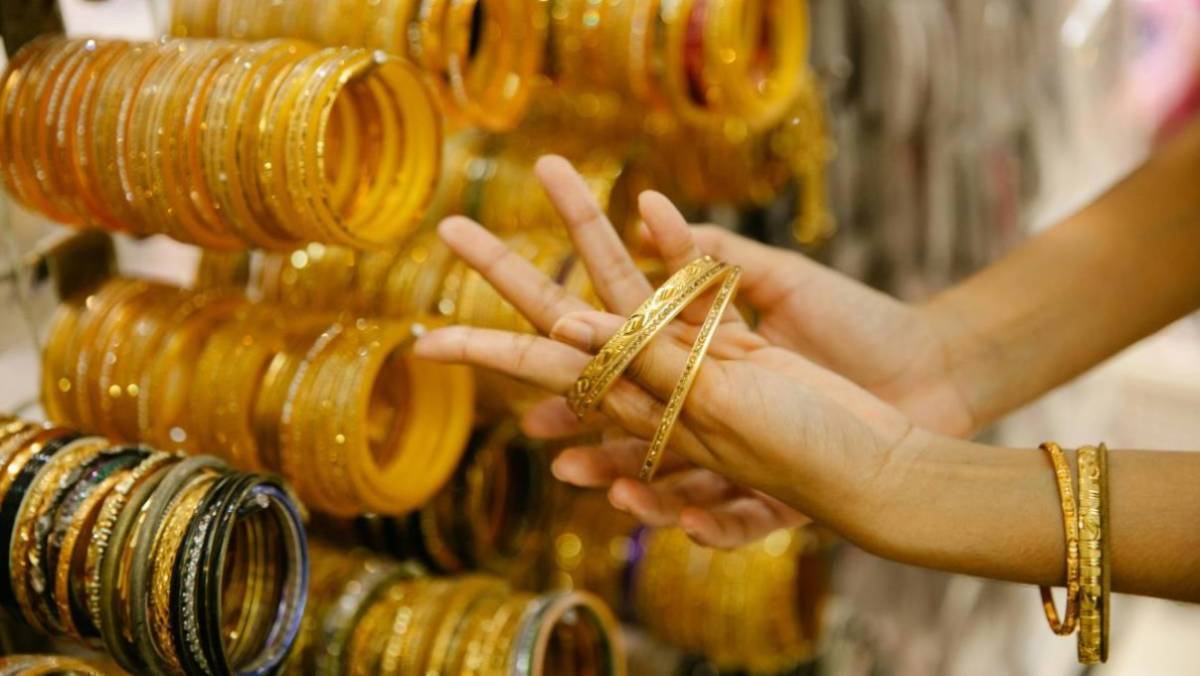
DUBAI – Dubai’s gold market opened Monday with marginally softer sentiment, reflecting international trends shaped by currency strength and geopolitical tensions.
Rates released by the Dubai Jewellery Group showed stable retail pricing despite global weakness. The emirate continues to track global bullion closely, with local rates adjusting daily in response to shifts in international markets.
According to the latest figures, 24K gold was priced at Dh569.00 per gram, while 22K stood at Dh526.75. Meanwhile, 21K gold was at Dh505.00, 18K at Dh433.00, and 14K at Dh337.75 per gram. These levels come as international prices retreat, placing Dubai’s gold trade in a cautious but steady position.
Global trends
Globally, gold prices declined to near one-week lows, weighed down by a stronger US dollar and rising oil prices. Spot gold dropped 0.4 percent to $4,726.64 per ounce, after touching an intraday low of $4,643, its weakest level since early April. US gold futures also slipped, falling 0.8 percent to $4,748.70.
The strengthening dollar, which gained around 0.3 percent, made dollar-denominated bullion more expensive for investors using other currencies. This added pressure to gold, which traditionally benefits from uncertainty but struggles when interest rate expectations remain elevated.
Markets have also scaled back expectations of interest rate cuts by the US Federal Reserve this year. Higher oil prices have raised inflation concerns, limiting the scope for monetary easing and reducing gold’s appeal as a non-yielding asset.
Oil impact
Oil prices surged back above $100 per barrel following heightened tensions in the Middle East. The developments came after failed negotiations between the United States and Iran, raising fears of further escalation in the region.
The situation intensified as the US prepared for potential restrictions around the Strait of Hormuz, a critical route for global oil shipments. Any disruption in this corridor has immediate implications for energy markets, fuelling inflation concerns worldwide.
Rising oil prices tend to push central banks towards tighter monetary policy to control inflation, indirectly weighing on gold demand. Since late February, global gold prices have declined by more than 11 percent, reversing earlier gains driven by geopolitical uncertainty.
Other precious metals
Other precious metals also reflected the downward trend seen in gold. Spot silver fell 1.9 percent to $74.41 per ounce, tracking broader weakness in the bullion market. Platinum edged lower by 0.2 percent to $2,041.89, while palladium posted a modest gain of 0.5 percent to $1,527.95.